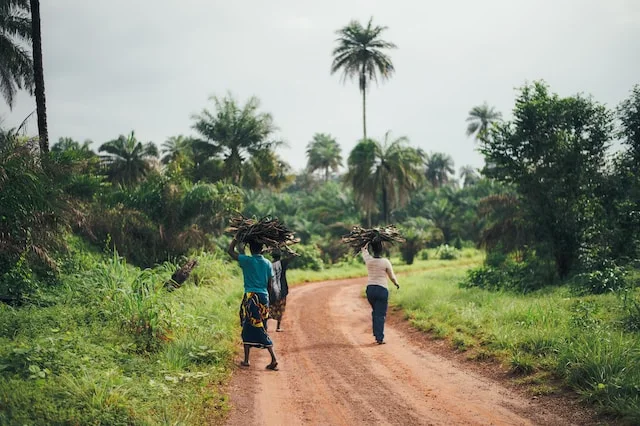
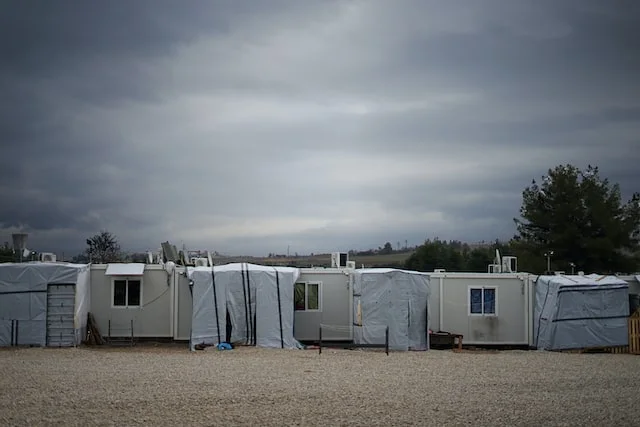
Africa, a land of immense beauty and rich diversity, is also home to some of the most harrowing refugee crises of our time. Across the continent, millions of people are uprooted from their homes by conflict, political instability, economic hardship, and climate change. These crises not only strain host nations but also test the resilience of humanity in the face of adversity.
Peace is a must in a world where social protection seeks to thrive.
In the Democratic Republic of Congo (DRC), years of armed conflict have displaced millions, forcing families to flee with little more than the clothes on their backs. Camps in neighbouring Uganda and Rwanda provide some respite, but they are often overcrowded and under-resourced. Here, hope becomes a scarce commodity as refugees grapple with limited access to education, healthcare, and employment opportunities. Yet, in the midst of this, stories of resilience emerge where a young Congolese woman, for instance, sets up a makeshift school in a camp, determined to give children a chance at a better future.
South Sudan’s protracted civil war has created one of the largest refugee crises in Africa. Over two million South Sudanese have sought refuge in countries like Ethiopia, Kenya, and Sudan, escaping violence and famine. Host nations, many with limited resources themselves, face immense challenges in accommodating these populations. In Kakuma, Kenya, one of the largest refugee camps in the world, efforts to integrate refugees into the local economy through entrepreneurship programs have brought some relief, though the path to stability remains uncertain.
Climate resilience, peace, and social protection for all must co-exist.
Climate change is becoming a significant driver of displacement, compounding existing challenges. In the Sahel region, desertification and erratic rainfall force entire communities to abandon their homes in search of water and arable land. These environmental refugees often find themselves in fragile urban settings, where resources are stretched thin. A farmer from Burkina Faso recalls the heart-wrenching decision to leave his ancestral land, not because of war but because the soil could no longer sustain his family.
These crises underscore a critical reality that the Social Protection Institute has consistently emphasised: sustainable social protection coverage cannot be achieved without lasting peace. Social protection systems are designed to cushion vulnerable populations from shocks, provide safety nets, and promote human dignity. Yet, in regions plagued by conflict, these systems are often rendered ineffective or entirely inaccessible. War and instability disrupt the very infrastructure required to deliver services, from healthcare to social cash transfers.
Take Somalia as an example, where decades of conflict have left millions without access to basic social protections. Without peace, efforts to expand healthcare coverage, education, or livelihood programs are repeatedly undermined by violence and insecurity. The Social Protection Institute advocates for integrated approaches that prioritise peacebuilding as a foundation for achieving sustainable social safety nets. When conflict ceases, nations can redirect resources toward systems that empower individuals and communities to rebuild their lives.
This quest for sustainable peace aligns with the broader global vision of the International Federation for World Peace (IFWP). The IFWP has long championed the idea that lasting peace is a prerequisite for addressing the root causes of displacement and instability. Their call for global cooperation resonates deeply in Africa, where the cost of war and displacement is borne not just by refugees but by entire societies. Without peace, the cycle of displacement and human suffering continues unchecked.
The refugee crises in Africa are a stark reminder of our shared humanity and the interconnectedness of peace, social protection, and development. Addressing these challenges requires a multifaceted approach: providing immediate aid to those displaced, fostering political solutions to conflicts, and investing in systems that build resilience.
Africa’s refugees display remarkable resilience in the face of adversity. They remind us of the urgent need for a world where peace is not a fleeting moment but an enduring reality. Their stories are a call to action for global solidarity, sustainable solutions, and the transformative peace envisioned by the IFWP and supported by the principles of the Social Protection Institute.
In the end, achieving sustainable social protection coverage is not just a technical endeavour; it is a deeply human one, rooted in the shared dream of a world where no one is left behind and where sanctuary and stability are the birthrights of all.